Fraser Valley Winery Tasting Fees in 2026: A Practical Budget Guide
September 24, 2026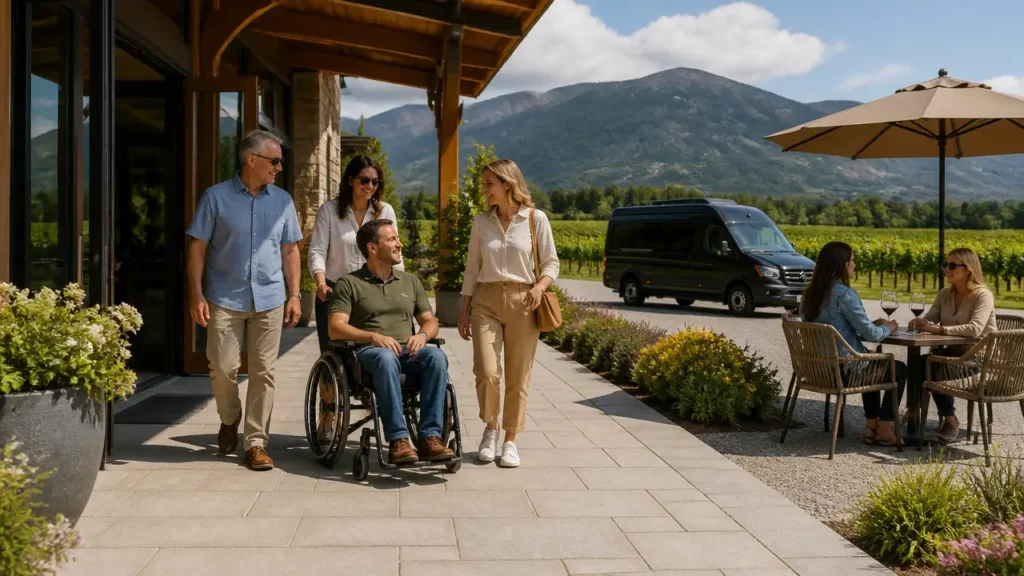
An accessible Fraser Valley wine tour starts with specific questions, not a general “accessible” label. A winery may offer step-free access to its tasting room but have gravel paths, a cellar tour with stairs or a restroom that is difficult to reach. Transportation also requires separate confirmation: a standard limousine, SUV or Sprinter van is not automatically suitable for every wheelchair or mobility device.
The most reliable approach is to plan the route around the traveller’s actual needs, then confirm the details with every winery and the transportation provider before paying a deposit.
Start with the mobility details that affect the day
Before calling wineries, make a short list of the practical requirements. Consider whether the guest uses a manual wheelchair, power chair, scooter, walker or cane; whether they can transfer into a vehicle seat; and whether the mobility device can fold or must remain assembled. Note the device’s width, height, length and weight, including the user if a lift has a combined weight limit.
Also consider stamina and terrain. A guest may manage a short paved walk but not a sloped vineyard path, loose gravel or a long distance between the vehicle and tasting room. These details determine which properties and tour formats are realistic.
Questions for each winery
Ask the winery to describe the complete route from the vehicle drop-off point to the tasting table. “Wheelchair accessible” can mean different things from one property to another, so request details about:
- Step-free access from parking or the vehicle drop-off area
- Door width, thresholds, ramps and slopes
- Paved, gravel, grass or uneven surfaces along the route
- Elevator access if the tasting room is not on the entrance level
- Whether vineyard, cellar or production areas can be skipped
- Accessible tables and enough room to manoeuvre around them
- Indoor access in case weather makes outdoor routes uncomfortable
Do not assume that a winery tour and a tasting-room visit have the same access conditions. Chaberton Estate Winery, for example, states that its winery tour is not suitable for guests with mobility constraints. That does not necessarily answer whether a guest can participate in a seated tasting without joining the tour. Ask directly if the itinerary can focus on the tasting room, patio or bistro instead.
Regional accessibility listings can help identify possible stops, but they should be treated as a starting point rather than a guarantee. Destination Fraser Valley describes Seaside Pearl Farmgate Winery as offering easy access to its entrance, patio and vineyard, including wheelchair-accessible tables. Conditions and operating arrangements can change, so confirm the current route when making the reservation.
Restrooms deserve their own confirmation
A tasting room may be accessible while its restroom is not. Ask where the restroom is located relative to the tasting area and whether the route is step-free. If a guest has specific requirements, confirm the details rather than relying on the word “accessible.” Useful questions include:
- Is the restroom on the same level as the tasting room?
- Is there enough turning space for the mobility device?
- Does the door provide sufficient clearance and open easily?
- Are grab bars installed, and is the sink usable from a seated position?
- Will the restroom be open during the planned tasting?
Build in a confirmed restroom stop at a suitable point on the route, particularly if the itinerary includes several rural properties. Do not generalize from one winery or restaurant to the next.
Confirm whether the tasting is seated
Standing tastings can be tiring and may not work for every guest. Ask whether the winery can reserve a stable seat or table with suitable knee clearance, and whether the guest may remain seated throughout the tasting. Find out if the group will move between rooms or stations.
Indoor and patio seating can also make a significant difference in wet or hot weather. Some properties offer reserved seating or tableside service, but availability may depend on the booking type and group size. Request the seating arrangement when you reserve rather than hoping it can be arranged on arrival.
A mobility-friendly itinerary usually works better with two or three well-spaced stops than with a packed schedule. Fewer wineries allow more time for arrival, restroom breaks, seated tastings and an unhurried meal. The goal is a comfortable day, not the maximum number of tasting-room visits.
Questions for the transportation provider
Transportation should be assessed separately from winery access. Describe the passenger and mobility device clearly and ask for an exact vehicle match. Questions to ask include:
- Is the vehicle step-free, or does it have a certified ramp or lift?
- Can the guest travel in the wheelchair, or must they transfer to a passenger seat?
- What are the lift, doorway and interior height limits?
- What are the maximum device dimensions and combined weight limits?
- How is the device secured during travel?
- Can the device remain assembled, and where will it be stored?
- Can the driver wait while the guest reaches the property entrance?
- What assistance does the driver provide at the vehicle, and what assistance must be provided by a companion?
- Is there room for wine purchases, bags and any additional equipment?
A luxury vehicle may be comfortable without being accessible. Get the answers in writing and, where necessary, provide measurements or photographs of the mobility device. Public paratransit is not a simple substitute for a private multi-winery vehicle: HandyDART and similar services have eligibility, advance-booking and device-limit requirements, and their assistance generally covers the accessible exterior door rather than escorting a passenger through a winery.
If your group is travelling from Maple Ridge, a Maple Ridge limousine service may be relevant for the journey to the Fraser Valley, but accessibility and vehicle compatibility still need to be confirmed directly. Likewise, guests arriving by air should ask about accessible equipment and transfer arrangements before booking Vancouver airport limo transportation.
Plan the route around rest, not just geography
Allow extra time between stops for loading, unloading and the walk from the vehicle. Ask wineries where the driver can safely drop off a guest and whether the vehicle can remain nearby. A route that looks short on a map may be tiring if it involves several transfers, a long outdoor path or a steep entrance.
For route ideas, an Abbotsford wine tour can provide a useful starting point for a Fraser Valley day trip. Treat any suggested itinerary as a framework: the final selection should be based on confirmed access, restroom and seating information.
Service-dog teams have access rights in British Columbia. Tell the wineries and transportation provider in advance so arrangements are clear, while remembering that a certified guide or service dog is not an ordinary pet. The Province of British Columbia’s guidance on service-dog access rights provides the relevant context.
Copy-and-send booking checklist
When contacting a winery or tour company, this message covers the essentials:
“We are planning a private Fraser Valley wine tour for a guest who uses [mobility device]. The device measures [dimensions] and weighs approximately [weight]. Can the vehicle accommodate it, and can it remain assembled during travel? At each winery, is the route from vehicle drop-off to the tasting room paved and step-free? Is there an accessible restroom on site? Can you reserve a stable, accessible seat and provide a seated tasting? We would prefer to avoid cellar, vineyard or production areas if they are not accessible. How much time can you allow between stops, and what assistance is available at the vehicle and entrance?”
Clear answers to those questions are more useful than a broad accessibility promise. Once the vehicle, wineries, restroom stops and seating plan are confirmed, the wine tour can be built around the people attending rather than around assumptions about what they can manage.