Vancouver Airport to Fraser Valley Wine Tour: Plan a Same-Day Trip
October 6, 2026
Fraser Valley Wine Tours for Groups of 8–14: How to Plan the Day
October 10, 2026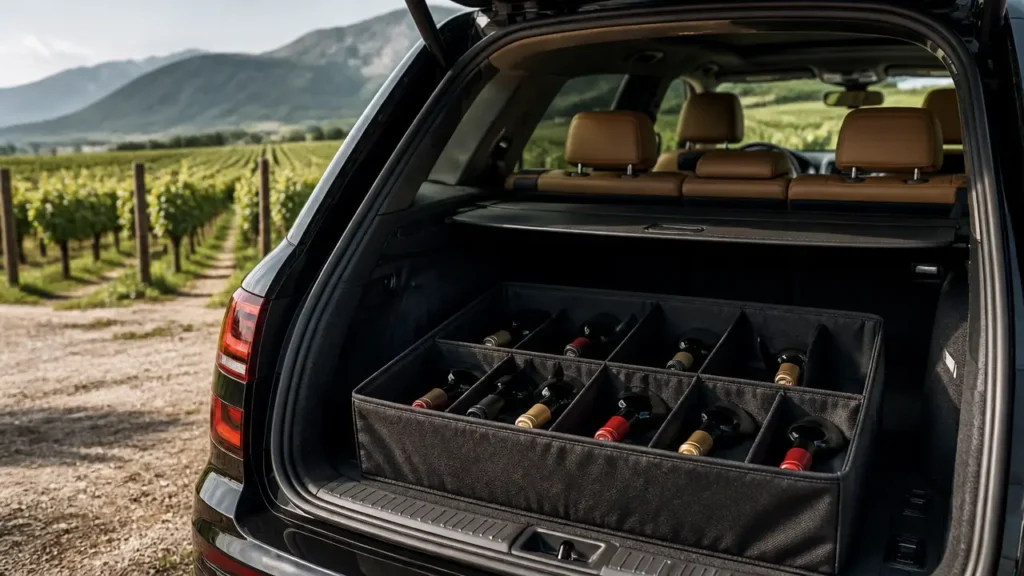
On a Fraser Valley wine tour, the tasting is only part of the planning. If you find a bottle—or several—that you want to take home, the best option depends on where you are travelling next: another B.C. destination, a different Canadian province, the United States or an international airport.
Before the first tasting, tell your tour operator that you may be buying wine. A private vehicle makes it easier to plan a final winery stop and load purchases directly into the vehicle, but available storage should be confirmed in advance. Vehicle space is not the same as a guaranteed case capacity.
Can you take Fraser Valley wine home?
Usually, yes—but transport and customs rules change with your destination. Canadian residents travelling between provinces face a different situation from visitors leaving Canada. U.S. visitors must declare alcohol when entering Canada and must declare it again when returning to the United States. Customs officers, provincial liquor authorities, airlines and carriers each apply their own rules.
For current Canadian entry information, check the Canada Border Services Agency guidance for visitors before your trip. It identifies 1.5 L of wine—about two 750 mL bottles—as the standard visitor quantity threshold in the relevant circumstances. Duties, taxes or provincial levies may apply above an exemption, and the final amount depends on the product, destination and point of entry.
Visitors in British Columbia must also meet the province’s legal drinking age of 19. A customs allowance is not permission to resell wine, and a rule that applies to personal baggage does not automatically apply to a mailed or couriered shipment.
Three practical ways to bring bottles home
1. Carry them in the tour vehicle
For a local itinerary or a return to a Vancouver hotel, this is often the simplest arrangement. Ask where bottles will be stored, especially if you expect to buy a mixed case. Keep wine upright when practical, place it in a divided carton or purpose-built wine carrier, and secure it so bottles cannot roll or strike one another.
These are practical handling precautions rather than legal requirements. Avoid leaving wine in a hot vehicle for extended periods, and do not assume that a trunk is temperature-controlled. In winter, ask about protecting bottles from prolonged exposure to freezing temperatures as well.
If your plans include airport pickup or drop-off, arranging the timing in advance matters more than adding a last-minute winery stop. For visitors staying near the airport, a Richmond limousine service may be relevant to the wider transfer plan, but it cannot replace customs or airline advice.
2. Ask the winery to ship the bottles
Shipping can be the cleanest solution when you are flying, travelling without checked baggage or buying more wine than you want to carry. Ask the winery whether it can arrange delivery to your home, hotel or another lawful destination. Do not assume that you can package wine and send it through an ordinary parcel service yourself.
Canada Post restricts the shipment of intoxicating beverages, while UPS Canada generally accepts alcohol shipments from licensed shippers with an approved alcohol-shipping contract. A winery or licensed retailer may be able to arrange a compliant shipment; an ordinary visitor usually cannot create the same arrangement independently.
Before paying, confirm the bottle price and delivery charge separately, the destination’s eligibility, expected dispatch timing, packaging, adult-signature requirements and what happens if nobody is available. If the shipment is going to a hotel, ask the hotel first whether it accepts alcohol deliveries and how long it will hold them.
3. Pack wine in checked baggage
A 750 mL bottle cannot normally pass through airport security in carry-on baggage because liquids in carry-on bags are limited to containers of 100 mL or less. Checked baggage may be possible, subject to the operating airline’s current rules, baggage allowance and fees.
Use a purpose-built bottle sleeve or a sturdy divided carton, then place the protected bottles in the centre of a hard-sided suitcase surrounded by clothing. Keep receipts and check the airline’s fragile-item conditions before departure. Air Canada, for example, states that liquids over 100 mL are not accepted in carry-on baggage and publishes conditions for alcoholic beverages and fragile items in checked baggage. Rules can vary for partner or connecting airlines, so check every carrier on the itinerary.
| Option | Best for | Main thing to confirm |
|---|---|---|
| Tour vehicle | Local hotel drop-off or a private return trip | Available storage, bottle security and temperature exposure |
| Winery-arranged shipping | Travellers flying or buying several bottles | Destination eligibility, delivery fee and adult signature |
| Checked baggage | Small purchases carried on an existing flight | Airline allowance, packaging and customs declarations |
Rules for Canadian and U.S. visitors
Canadian residents returning after an absence of 48 hours or more may generally include up to 1.5 L of wine in the alcohol portion of the personal exemption. That is a returning-resident exemption, not a universal allowance for every visitor or every shipment.
Within Canada, B.C. guidance allows people to bring liquor from another province on their person for personal consumption without provincial quantity restrictions or limits. Separate rules address wine produced in another province and purchased from the producing winery. Those domestic provisions should not be treated as permission to import wine internationally or sell it commercially.
U.S. visitors should check both Canadian and U.S. requirements. The quantity that can enter Canada, the amount exempt from duty, and the amount permitted into a U.S. state are not necessarily the same. Declare the bottles, keep purchase receipts and ask the border agency about duties or taxes rather than relying on an informal estimate.
Plan bottle transport around the route
Route and season affect the practical choice. A short Langley itinerary with a hotel return may make vehicle transport easy, while an Abbotsford route followed by a flight may favour winery-arranged shipping. If you are considering a longer day, compare the route with the guidance in our Abbotsford wine tour guide before deciding where to make your final purchase.
Weather matters too. Our guide to the Fraser Valley wine tour in winter explains why cold conditions and shorter daylight hours deserve extra planning. For a broader seasonal view, see the best time of year for Fraser Valley wine tours.
Guests who expect to buy a case should mention it when booking, not at the last winery. That gives the operator time to confirm practical storage, adjust the itinerary and make the return journey comfortable for both passengers and bottles. For visual reference when comparing vehicle styles, the Vancouver limousine image gallery shows the type of transportation often used for private group travel, although the specific vehicle and storage arrangement should always be confirmed for your booking.
A quick pre-departure checklist
- Tell the tour operator how many bottles you may purchase.
- Ask the winery whether it ships to your exact destination.
- Confirm delivery charges, timing, adult signature and hotel acceptance.
- Use divided packaging and keep bottles secured during vehicle travel.
- Check the operating airline’s baggage and fragile-item rules.
- Keep receipts and declare the wine at the relevant border.
- Verify current rules with CBSA, the airline, the carrier and the winery before departure.
Regulations and carrier policies change, and this article is general travel information rather than legal or customs advice. The safest plan is to decide how the bottles will reach their destination before buying them. That small step can turn an excellent Fraser Valley wine tour into an easy trip home instead of a last-minute packaging problem.